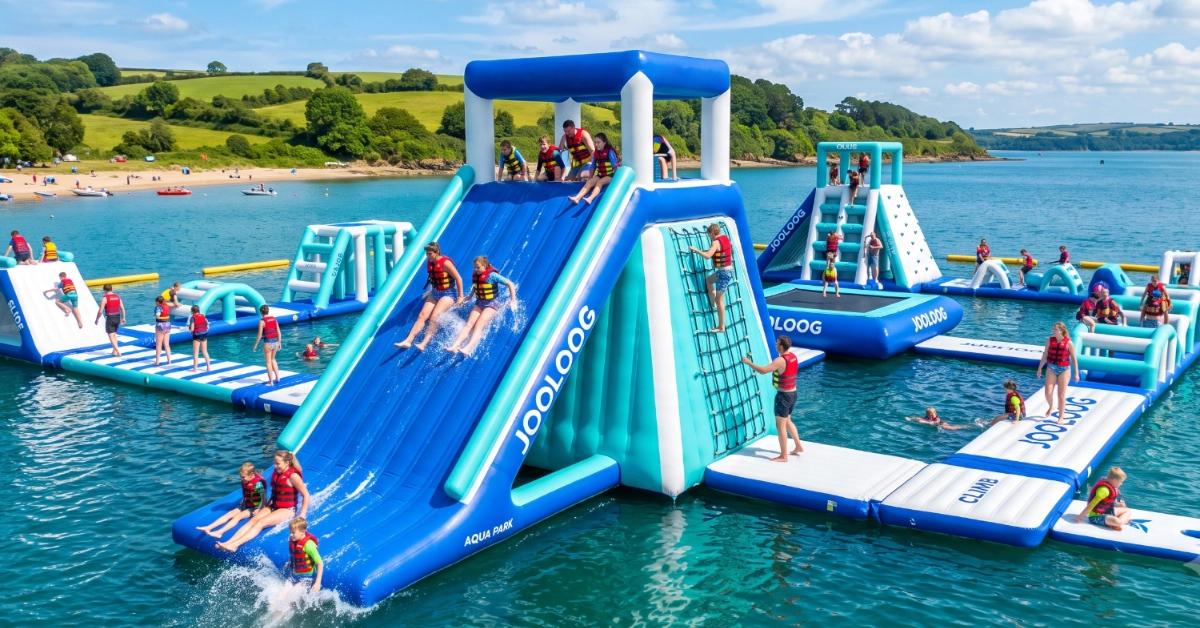
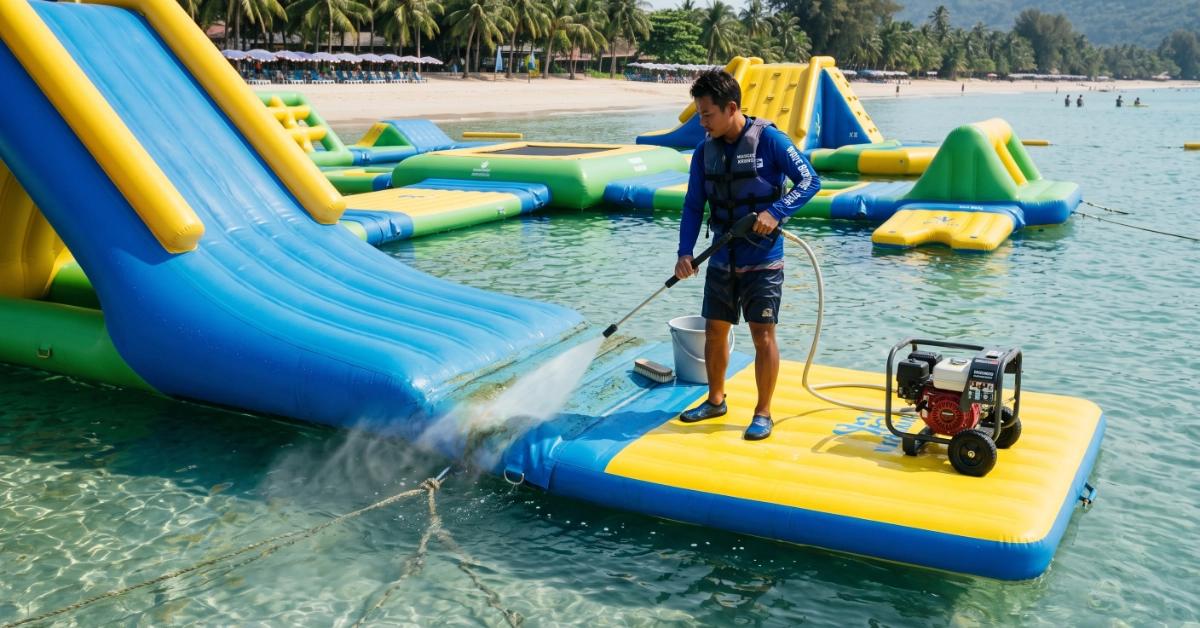
Why Regular Cleaning Matters
Floating inflatable water parks are constantly exposed to:
-
Algae
-
Saltwater
-
Chlorine
-
UV rays
-
Sand and dirt
-
Bird droppings
-
Organic debris
Without regular cleaning, these contaminants gradually damage the PVC surface, reduce product appearance, and may increase maintenance expenses.
Routine maintenance helps you:
-
Extend product service life
-
Maintain bright colors
-
Improve guest safety
-
Prevent mold and algae growth
-
Reduce repair frequency
-
Protect your investment
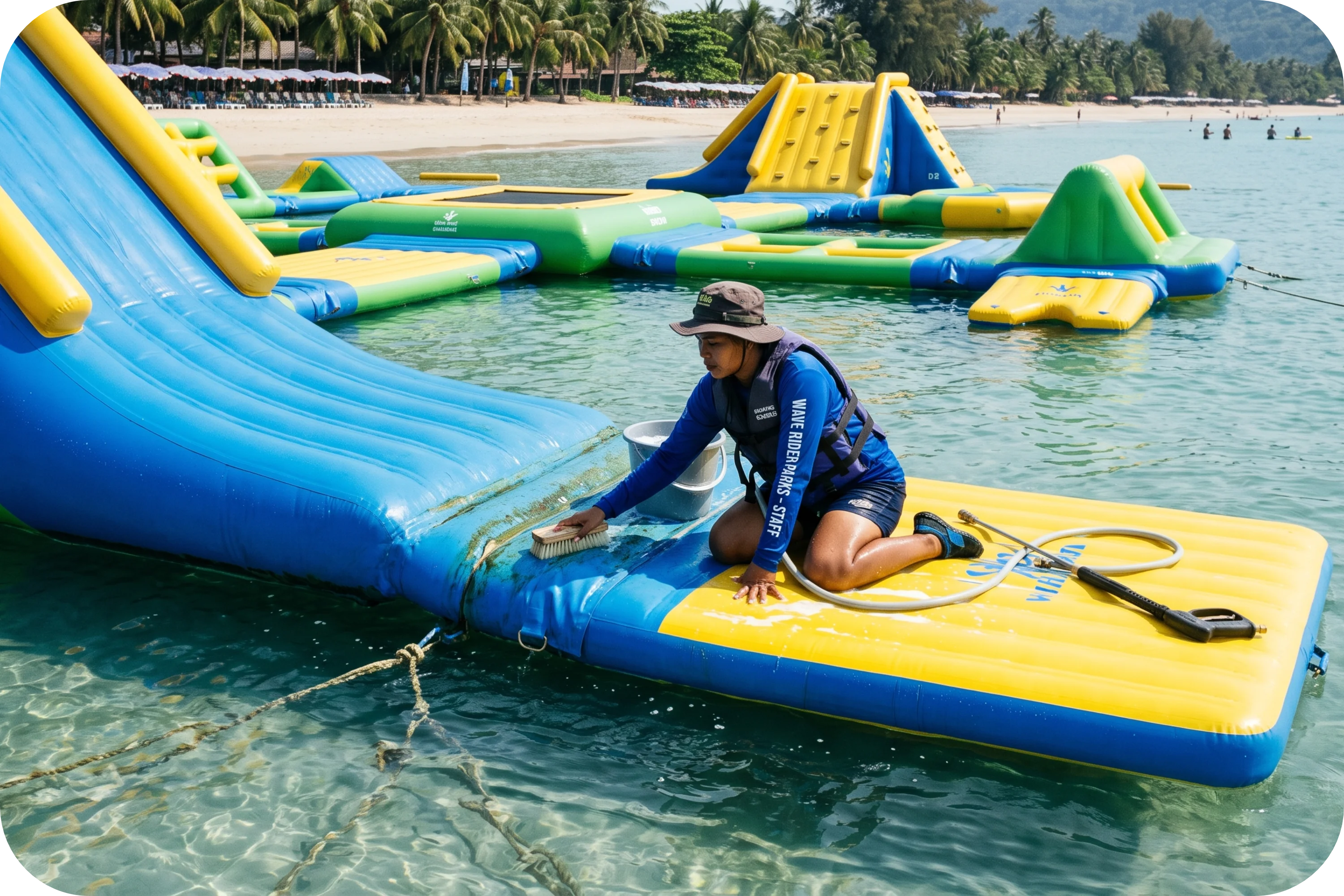
Daily Maintenance Checklist
Before opening each day, inspect every inflatable module.
Check for:
-
Dirt and mud
-
Loose anchor points
-
Air pressure
-
Surface scratches
-
Valve condition
-
Connecting straps
-
Floating stability
Remove leaves, branches, and other debris using a soft brush or sponge.
If operating in saltwater, rinse the products with fresh water whenever possible to reduce salt accumulation.
Understanding Algae Growth
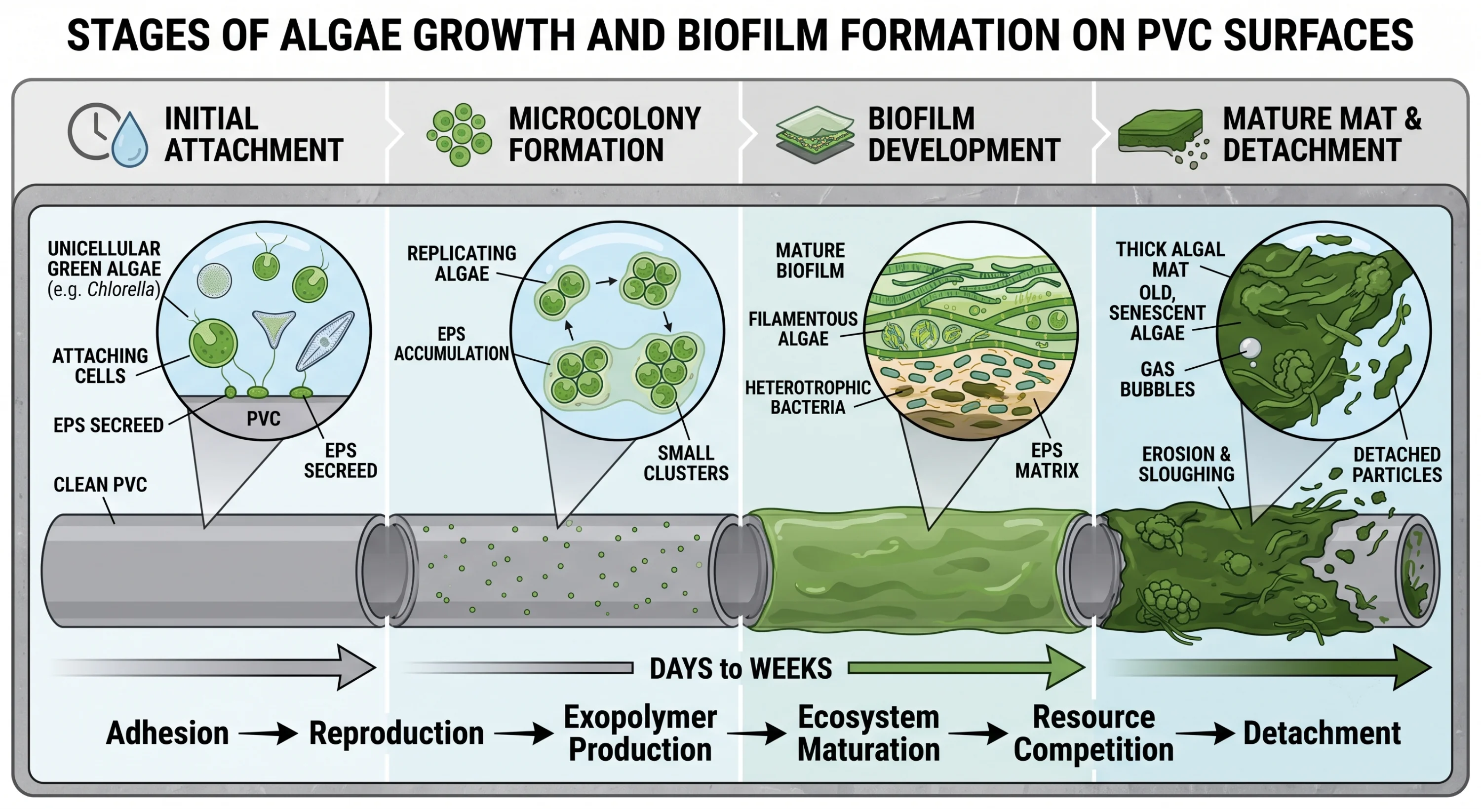
Algae is one of the biggest challenges for floating water parks.
If ignored, algae progresses through several stages:
-
Green surface film
-
Dark algae stains
-
Thick biological buildup
Early cleaning requires only mild washing, while heavy algae often needs specialized PVC cleaners and more labor.
The sooner algae is removed, the easier and less expensive maintenance becomes.
Recommended Cleaning Equipment
Professional maintenance begins with the right tools.
Essential Equipment
-
Soft sponge
-
Soft-bristle brush
-
Microfiber cloth
-
Fresh water hose
-
Low-pressure or medium-pressure washer
-
Approved PVC cleaner
-
PVC protectant
-
Protective gloves
-
Safety goggles
Avoid using:
-
Strong acids
-
Bleach
-
Industrial solvents
-
Metal brushes
-
Abrasive cleaning pads
These materials may permanently damage the PVC coating.
Step-by-Step Cleaning Process
Step 1 – Move the Product to Shore
Whenever possible:
-
Bring inflatable modules onto land
-
Disconnect connecting straps
-
Secure floating sections safely
-
Lay products on a clean protective tarp
Cleaning on land is easier and prevents contaminants from returning immediately.
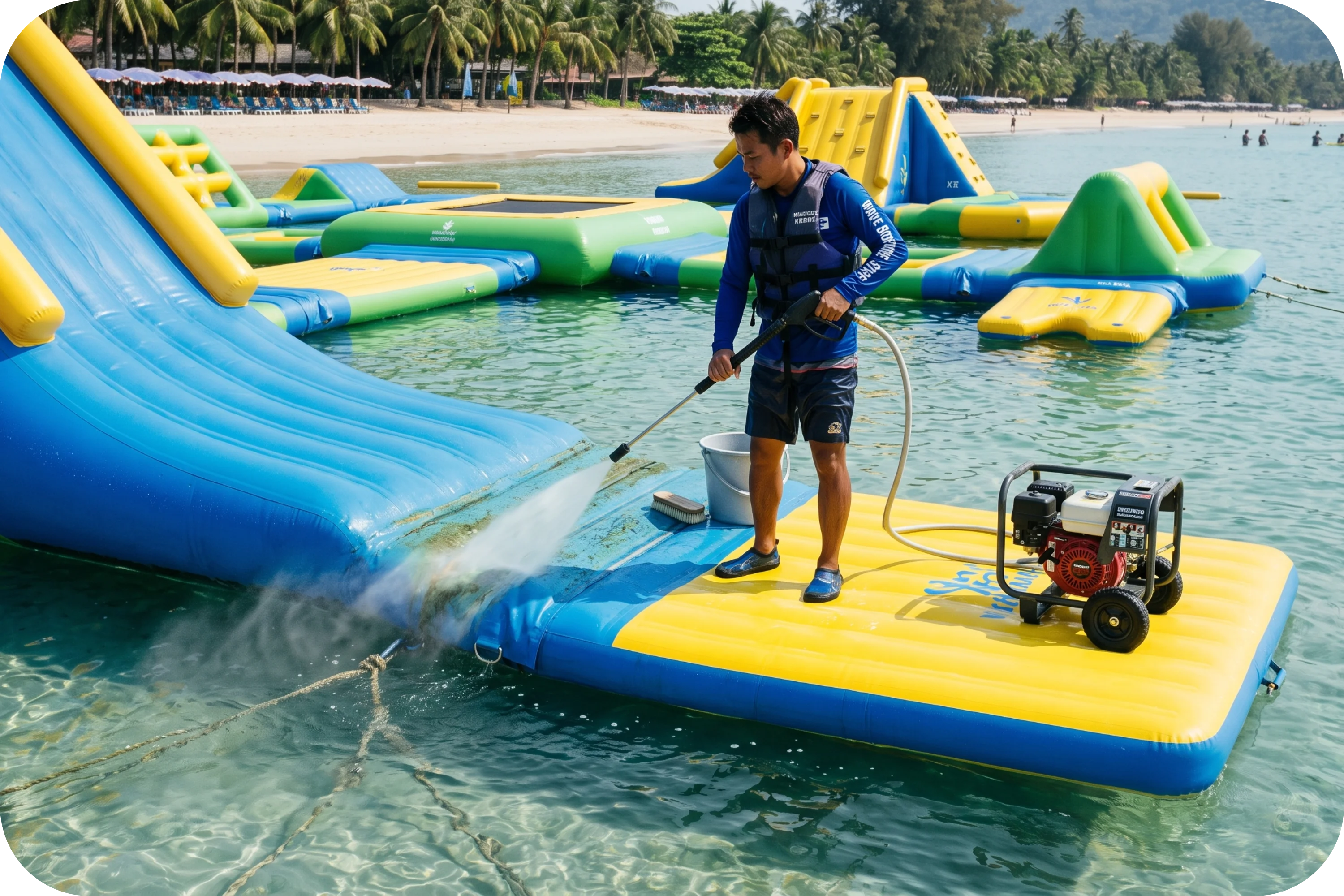
Step 2 – Initial Rinse
Rinse the entire surface using clean water.
This removes:
-
Sand
-
Mud
-
Dust
-
Loose organic matter
Avoid spraying extremely close to the PVC surface.
Maintain an appropriate spraying distance according to your pressure washer specifications.
Step 3 – Remove Dirt and Algae
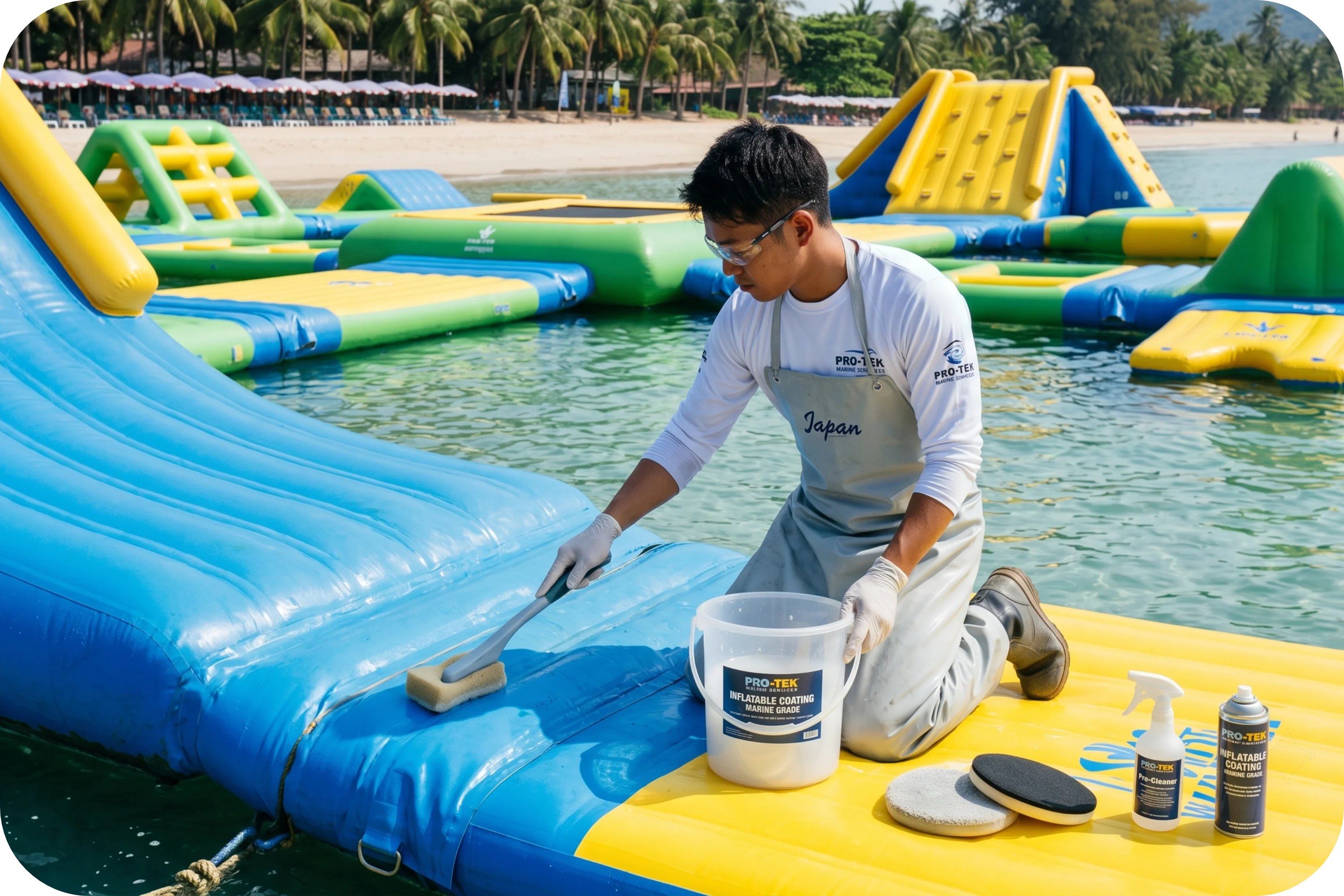
Apply an approved PVC cleaner.
Using a soft sponge:
-
Work section by section
-
Remove algae carefully
-
Clean seams thoroughly
-
Pay special attention to high-traffic areas
Never leave cleaning chemicals on the surface longer than recommended.
After cleaning, rinse thoroughly with clean water.
Step 4 – Dry Completely
Allow the inflatable to dry naturally.
Ensure:
-
No standing water remains
-
Seams are dry
-
Valves are moisture-free
Proper drying helps prevent mold during storage.
Step 5 – Apply PVC Protection
Once dry, apply a professional PVC protectant.
Benefits include:
-
UV protection
-
Better color retention
-
Easier future cleaning
-
Reduced material aging
-
Improved flexibility
Regular protection significantly extends product lifespan.
Seasonal Deep Maintenance
At least once every season, perform a comprehensive inspection.
Inspect for:
-
Air leaks
-
Worn seams
-
Damaged handles
-
Loose D-rings
-
Anchor system wear
-
Surface discoloration
-
Valve performance
Repair small issues immediately before they develop into expensive damage.
Proper Storage Tips
When the operating season ends:
Before Storage
-
Clean thoroughly
-
Dry completely
-
Remove all moisture
-
Inspect for damage
-
Repair if necessary
Storage Environment
Store products in:
-
A cool location
-
Dry conditions
-
Good ventilation
-
Away from direct sunlight
-
Away from rodents and sharp objects
Avoid folding the product in exactly the same position every year to reduce permanent crease marks.
Common Maintenance Mistakes
Avoid these common errors:
❌ Storing while still wet
❌ Using harsh chemicals
❌ Dragging inflatables across rough surfaces
❌ Ignoring small leaks
❌ Overinflating modules
❌ Skipping routine inspections
Good maintenance is always less expensive than major repairs.
Maintenance Schedule
| Frequency | Maintenance Task |
|---|---|
| Daily | Visual inspection, remove debris, check pressure |
| Weekly | Wash surfaces and inspect connectors |
| Monthly | Deep cleaning and valve inspection |
| Every Season | Complete structural inspection and repairs |
| End of Season | Deep clean, dry, repair, proper storage |
Why Choose JOOLOOG?
For over 25 years, JOOLOOG has specialized in manufacturing high-quality commercial inflatable water parks for global customers.
We focus on:
-
Premium commercial-grade PVC materials
-
Strict quality control
-
Customized inflatable water park solutions
-
Professional OEM & ODM manufacturing
-
Global project experience
-
Reliable after-sales support
Proper maintenance, combined with high-quality manufacturing, ensures your inflatable water park delivers excellent performance season after season.
Conclusion
Regular cleaning is not simply about appearance—it is a vital part of protecting your investment. A consistent maintenance routine helps prevent algae buildup, reduces repair costs, enhances visitor safety, and significantly extends the service life of your inflatable water park.
By following the best practices outlined in this guide, operators can keep their JOOLOOG Inflatable Water Park in excellent condition for years to come, ensuring a safe, attractive, and profitable attraction for every season.