Three numbers, not one
Suppliers quote a design capacity for an inflatable water park. Operators feel a comfort capacity. Staff experience a supervision capacity.
If you sell to the largest of the three, you will get complaints, injuries or both. Plan around the smallest.
The comfort limit: how much water one guest needs
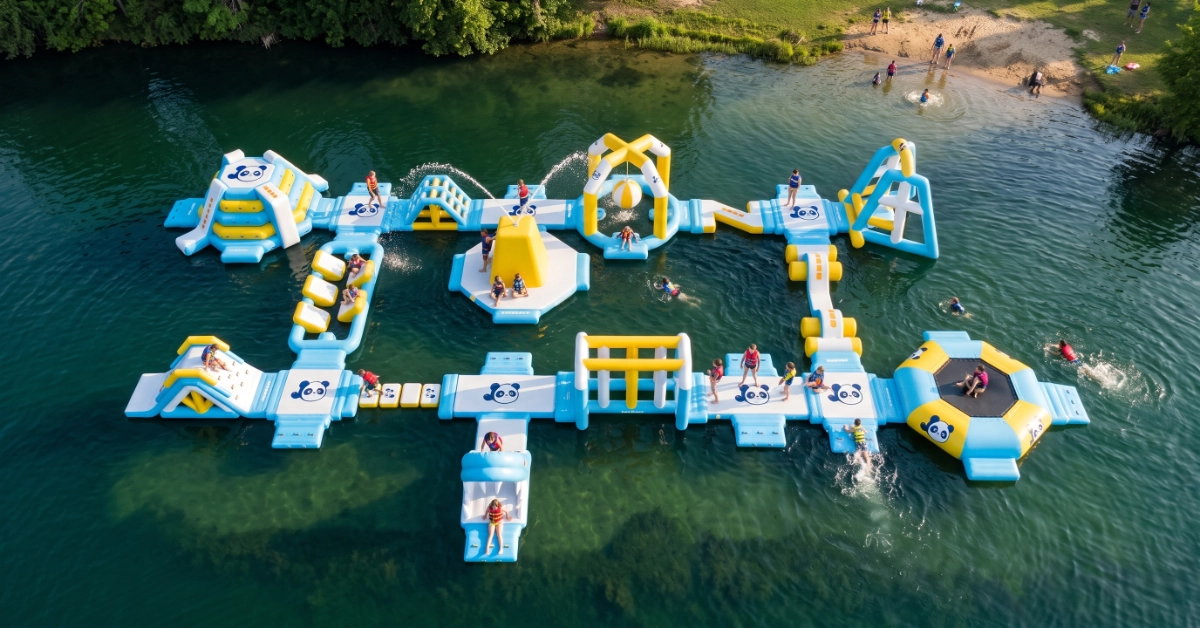
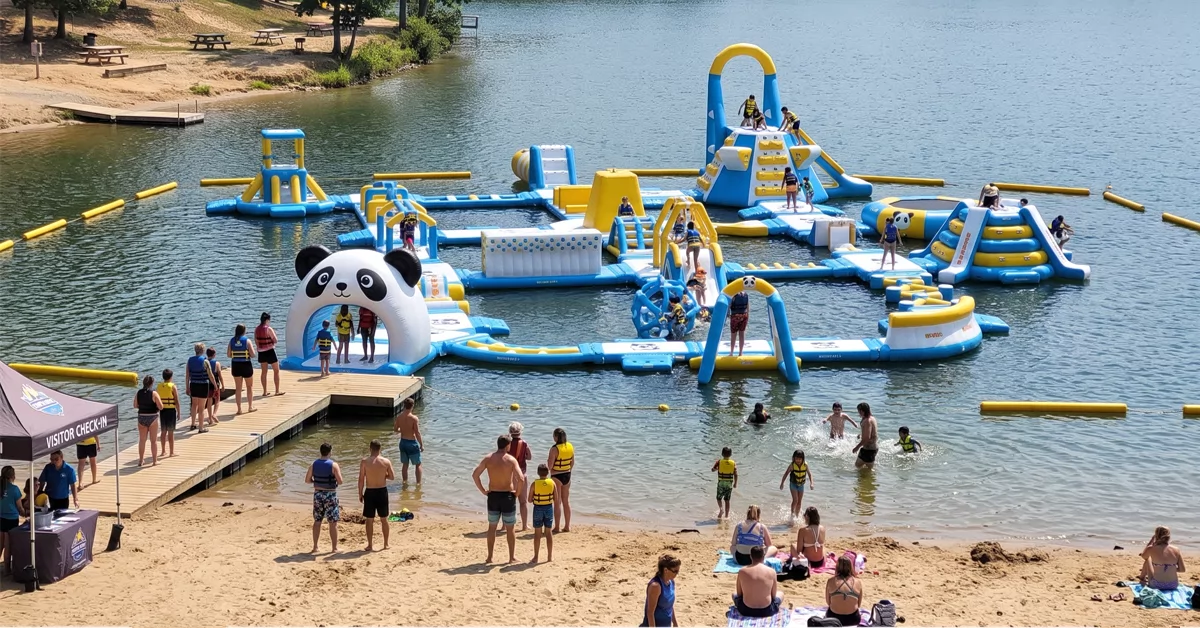
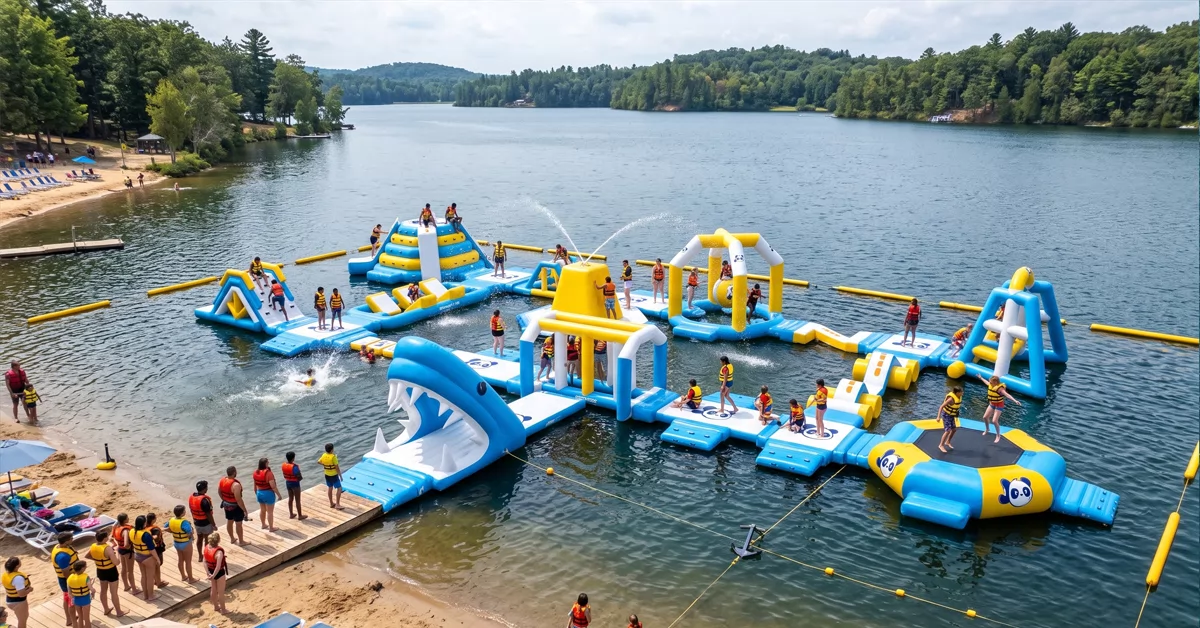
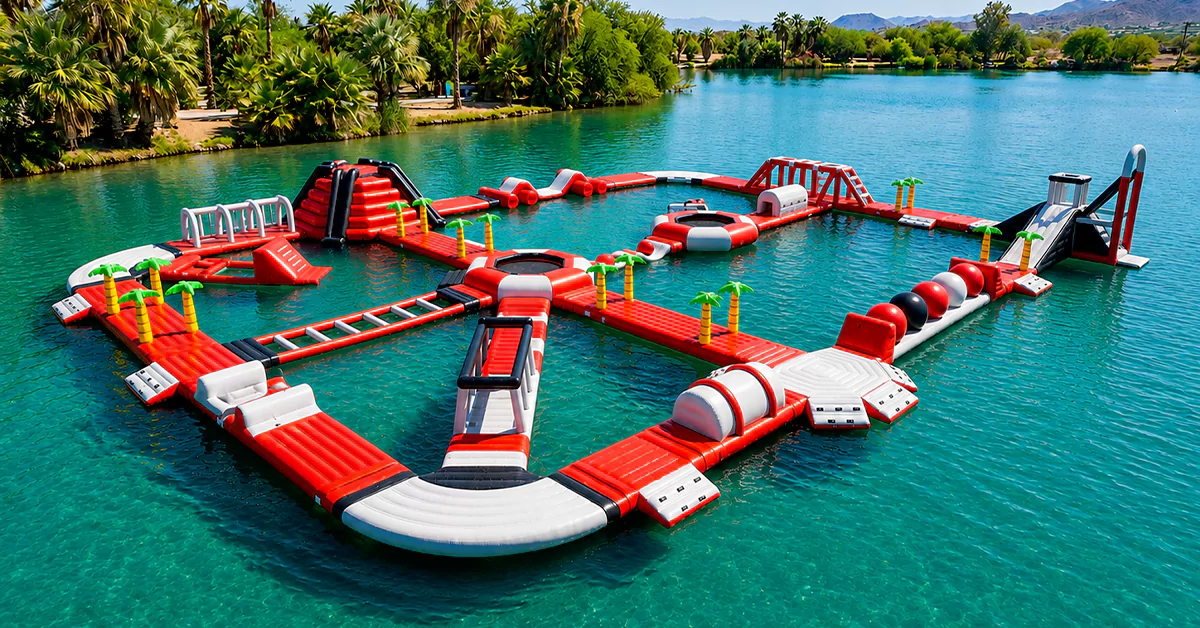
On a floating inflatable water park with towers, slides and connecting paths, a workable planning figure is one guest per 8–10 m² of wet surface. Below that, queues form on the modules and paths stop flowing.
A 2,000 m² park therefore holds roughly 200–250 guests at once. A 1,200 m² park holds 120–150. If you have not fixed the footprint yet, start with how much wet surface to build for your site — capacity is a consequence of that decision, not a separate one.
Treat this as a starting point, not a law. Parks with one big slide and open platforms feel crowded sooner than parks with many small features. The modular inflatable water park format lets you change that mix as you learn which zones guests actually use.
Session maths: where throughput really comes from
Simultaneous capacity only matters when you multiply it by turns per day.
| Input | Example |
|---|---|
| Simultaneous capacity | 200 guests |
| Session length | 90 minutes |
| Turnaround between sessions | 15 minutes |
| Operating hours | 10:00–18:00 |
| Sessions per day | 5 |
| Theoretical daily visits | 1,000 |
| Fill rate on a good day | 60–70% |
| Visits on a good day | 600–700 |
That is a good day, not an average. Across a 100-day season, most parks average 25–35% of peak-day throughput, which works out at 180–240 visits a day. Divide those visits by your open hours and you have throughput per hour — the number your gate staff actually feel. The distance between a good Saturday and a season average is where most business plans go wrong.
The supervision limit: the ceiling nobody models
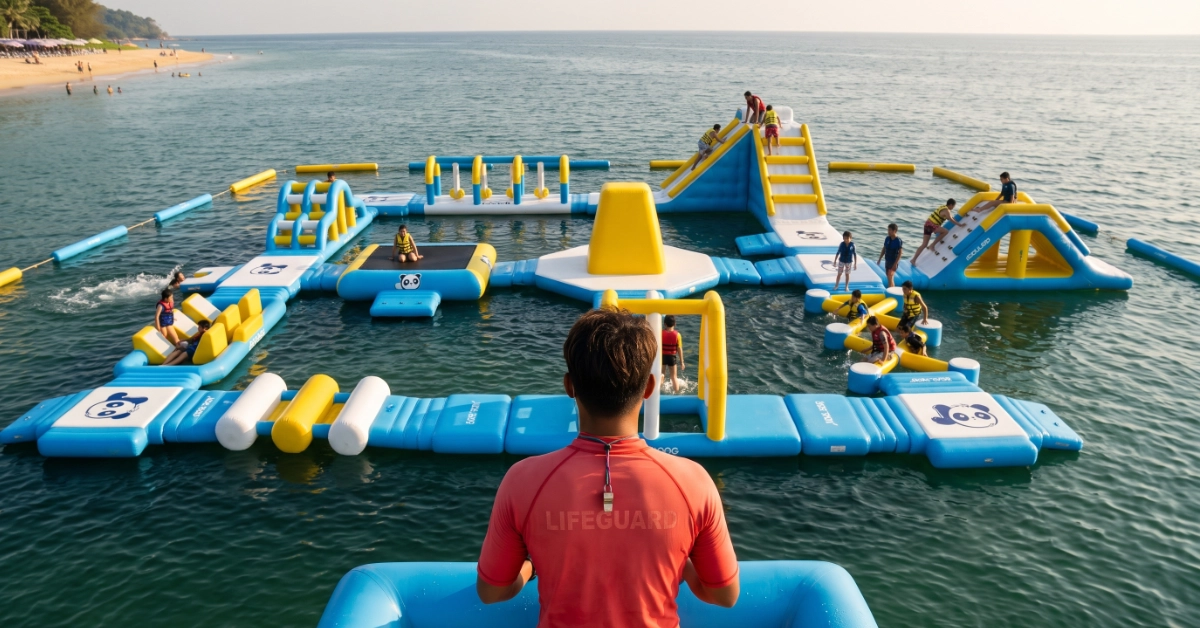
One attendant cannot watch more than a defined zone with a clear sightline. On open water that zone is smaller than most people assume, especially with glare, spray and moving guests.
If your staffing plan gives you six attendants on shift, your practical simultaneous capacity is six zones, not the 200 guests the inflatable water park was sold as. Add a rotation so nobody watches the same water for more than 45 minutes.
Where parks actually jam
Capacity is usually lost at the edges, not on the water:
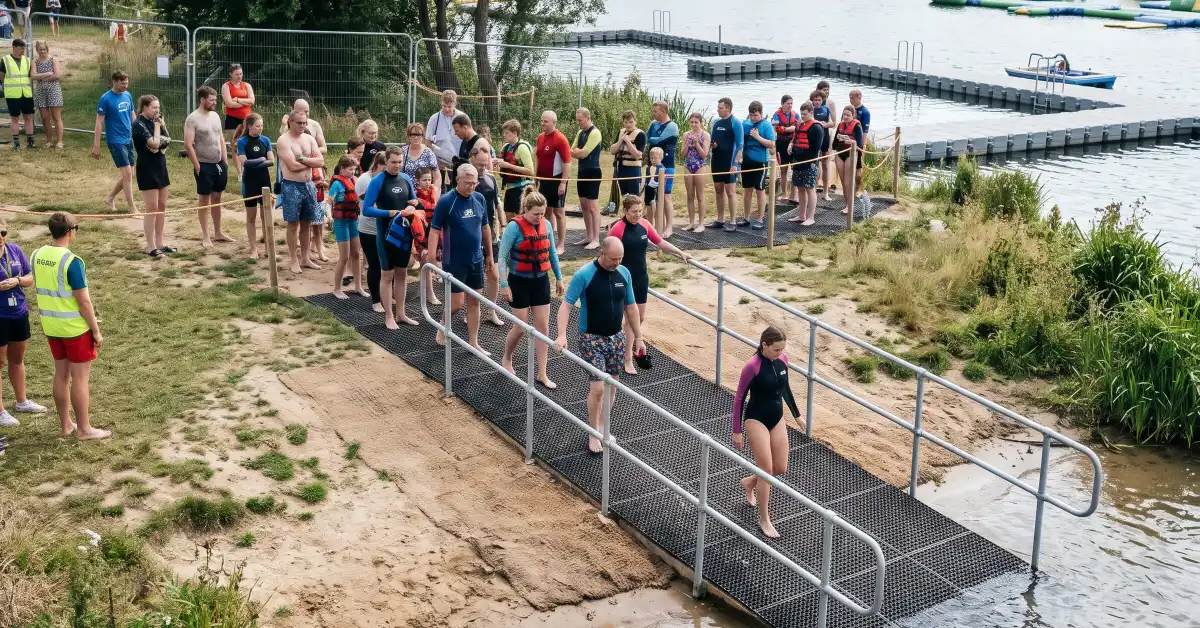
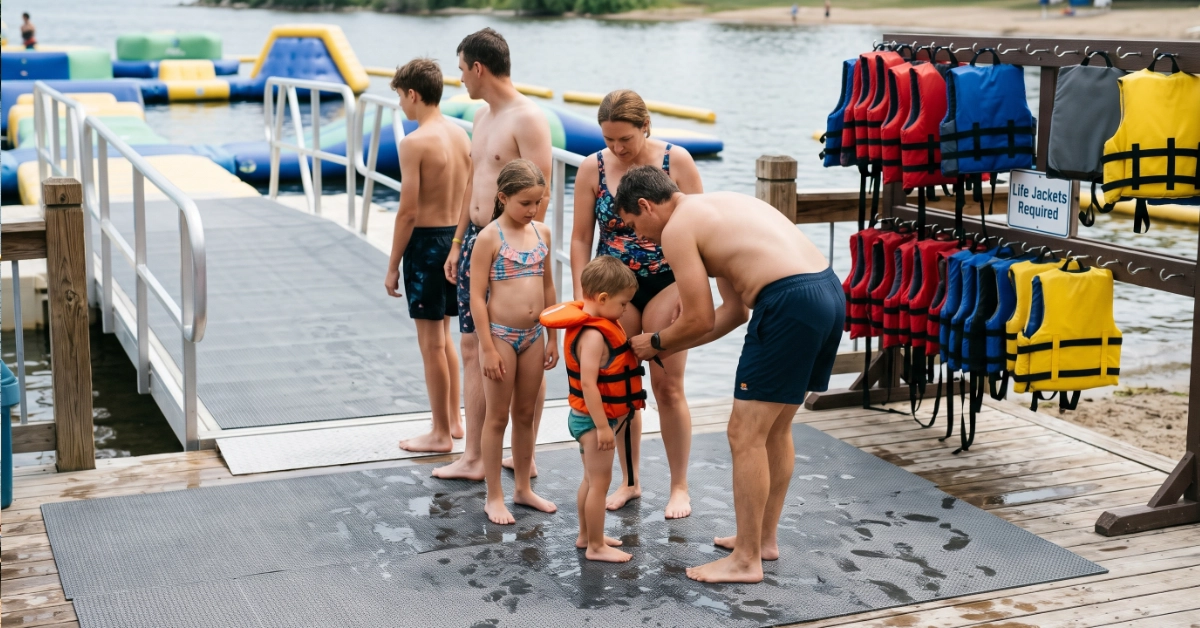
- The entry ramp. Guests queue in bare feet on hot decking, then stop to adjust a life jacket.
- The exit point. One ladder serves 200 people leaving at once.
- Changing and storage. No lockers means bags on the deck, which eats space and slows entry.
- The deep-end gate. A single staffed gate becomes a bottleneck at session start.
Fixing the ramp and adding a second exit often raises effective capacity more than adding a module.
A capacity worksheet
Work the three numbers for your own inflatable water park before you commit to a layout:
| Question | Your number |
|---|---|
| Wet surface area (m²) | |
| Divided by 8–10 m² per guest | |
| Sessions per day | |
| Attendants available per shift | |
| Zones one attendant can cover | |
| Lowest of the three | This is your sellable capacity |
Turning capacity into a season forecast
Capacity only becomes a plan when you multiply it by days and an honest fill rate. For most inflatable water park projects, the honest fill rate is the part nobody wants to write down.
| Input | Example |
|---|---|
| Simultaneous capacity | 200 |
| Sessions per day | 5 |
| Days open | 100 |
| Theoretical season visits | 100,000 |
| Season fill rate | 18–24% |
| Planned season visits | 18,000–24,000 |
That fill rate looks low next to a sold-out Saturday, and it should. It already accounts for rain, term time, cold snaps and the slow first three weeks before word of mouth builds.
If your plan needs 50,000 visits to work, you need either a bigger park or a longer season. Neither can be fixed by marketing alone — and before you argue with the fill rate, check what those visits are worth at realistic season contribution levels.
Add a session or add a module?
When demand outgrows capacity, an inflatable water park has two options and they cost very different amounts.
Adding a session costs almost nothing. It extends opening hours or tightens turnaround, and it works while your busiest sessions are still selling out.
Adding a module costs USD 8,000–30,000 before freight, mooring and blower capacity — see the line items behind that number. It works when every session is full and your site has room to grow.
The decision rule: if the peak session sells out more than four days a week, add capacity. If only Saturdays sell out, add a session on Saturday and leave the equipment alone.
Test it in week one
Pick your busiest session and count three things: guests on the water at peak, minutes waited at the entry ramp, and the number of times an attendant had to stop watching water to answer a question.
If peak guests are within 10% of your comfort limit and waits exceed five minutes, your next investment is flow, not equipment. If attendants are answering questions more than twice a session, your signage is costing you capacity.
If you want a second opinion on the three numbers for your inflatable water park, send your wet surface area, session plan and attendant count and we will run them against a layout.